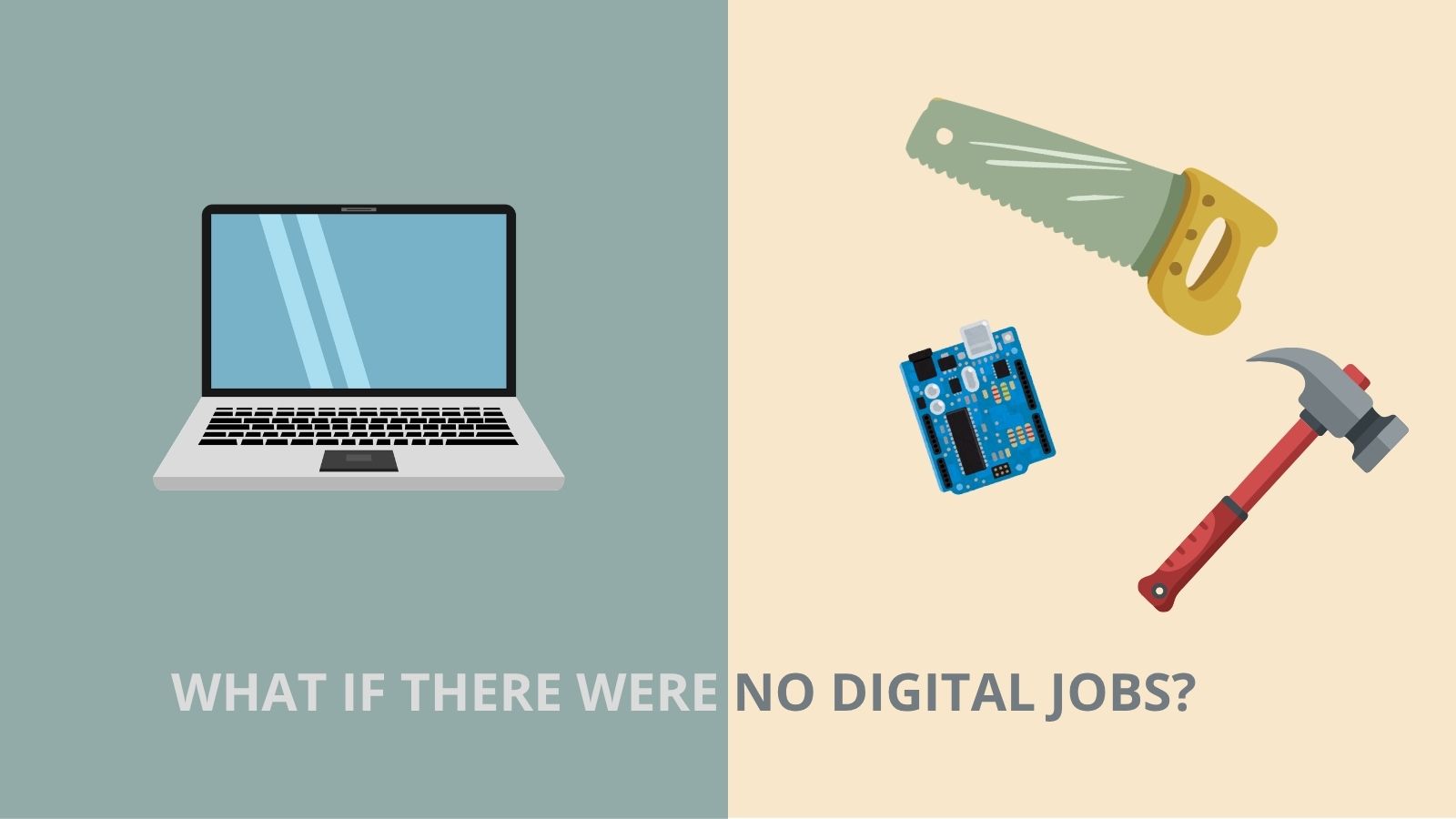
Here's a question for anyone with a purely digital job:
What would you do if there were no digital jobs?
Or if there were so few of them that most of us simply couldn't have one anymore?
This isn't meant to be pessimistic. A pessimistic view would sound like: "We'll all lose our jobs and be poor, and there's nothing we can do." That's not what this is about.
This question is about acknowledging the fact that it is a possible scenario.
I'm not saying this will definitely happen. But the chances aren't so low that they can be dismissed either.
Even if you think it's just a 10% probability, that's still high enough to be worth thinking about.
So let's take it seriously for a moment.
Physical, Hands-On Work
If digital jobs weren't an option, what kind of work would you do instead?
Something physical. Something hands-on.
Would you be a carpenter? A shoemaker? A nurse? A mover? A gardener?
There are countless jobs like this, and many of them are already in high demand.

Why This Is Actually an Optimistic Thought Experiment
This kind of thinking isn't about fear. It's cautiously optimistic.
It forces you to stop ignoring the elephant in the room and instead ask:
What could I learn to do? What might I actually enjoy doing, and potentially earn from?
You don't have to make a drastic change. You can start small.
Pick something and begin learning it as a hobby, on the side.
Even if this "no digital jobs" scenario never happens, the skills you build won't go to waste. In fact, they'll likely be useful in your everyday life.
Take woodworking. If you get into it, you might one day renovate parts of your home yourself instead of waiting weeks for a carpenter and paying lots of money on top of it.
Or take electronics. We're surrounded by more and more devices every year. At the same time, robotics is advancing, which means there will be an increasing need for maintenance and repairs.
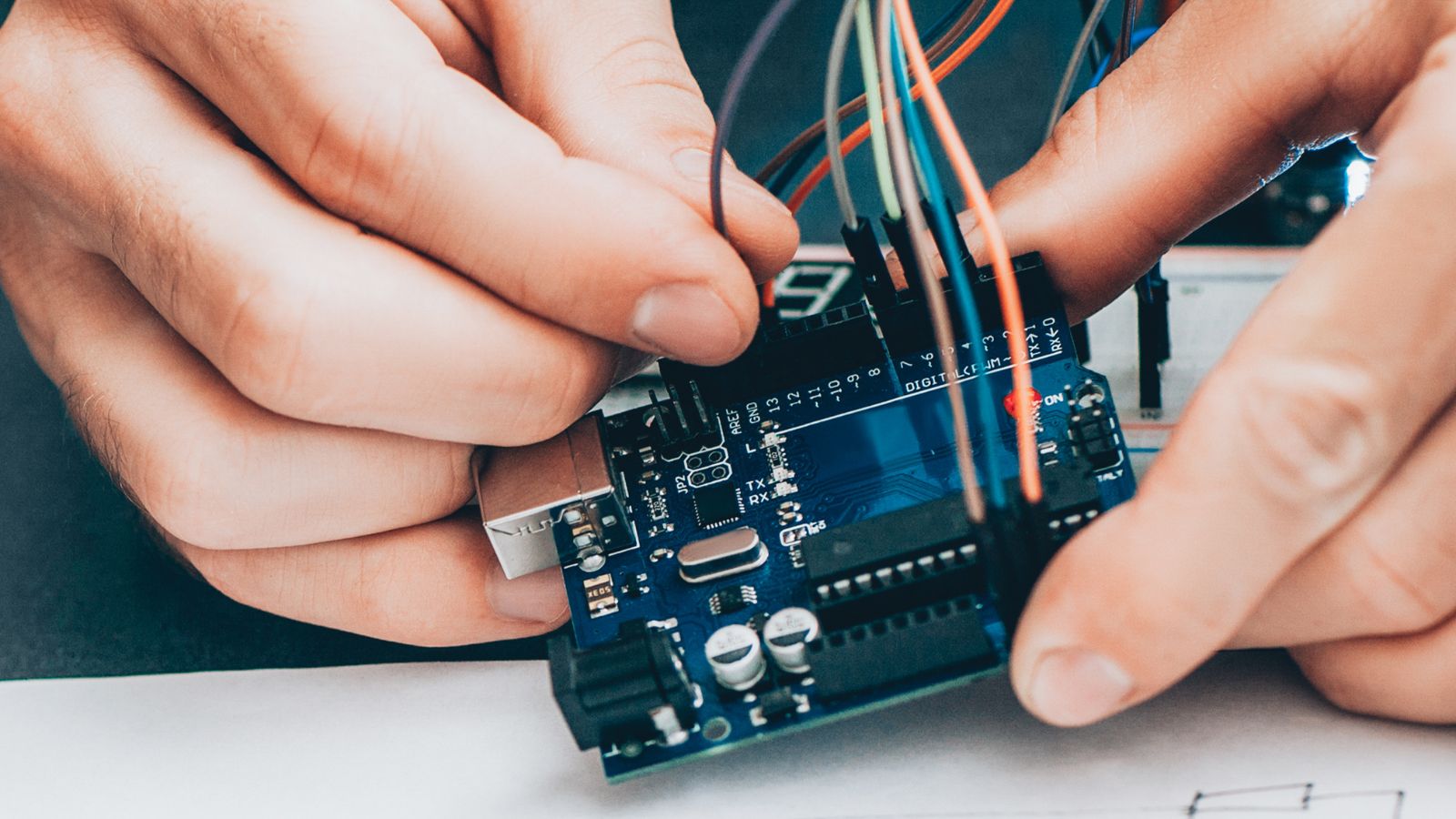
Learning how electronic components work and how to wire them properly is a valuable skill.
And even if you never turn it into a job, being able to fix your own devices can save you both time and money.
How to Hedge Yourself
So what can you actually do to prepare for a scenario where digital jobs become scarce?
Start simple.
Think about different types of physical work you might enjoy, even if you've never tried them before. Then try them out casually.
Visit a local makerspace, find a fab lab, or ask a friend who already has those skills to show you the basics. If nothing else, start by watching YouTube videos and getting familiar with the space.
If you don't know what to pick, just choose something at random and start exploring.
Follow a rabbit hole approach: learn a little, then go deeper, then deeper again, without worrying too much about where it leads.
A Few Easy Entry Points
Some skills are particularly easy to start with.
Electronics is one of them. You can pick up an Arduino and follow beginner tutorials online.
And you don't even need physical hardware at first, tools like Tinkercad let you simulate Arduino in your browser.
Also, don't worry about the coding part of electronics, you can use AI to vibe code that. The crucial skill here is to learn about electronics components like resistors, capacitors, and diodes, and how to wire them together.
Woodworking is another great option. If you have space at home, you can set up a small workshop. If not, makerspaces often have shared woodworking labs, or you might have a friend with a woodworking workshop and learn there.
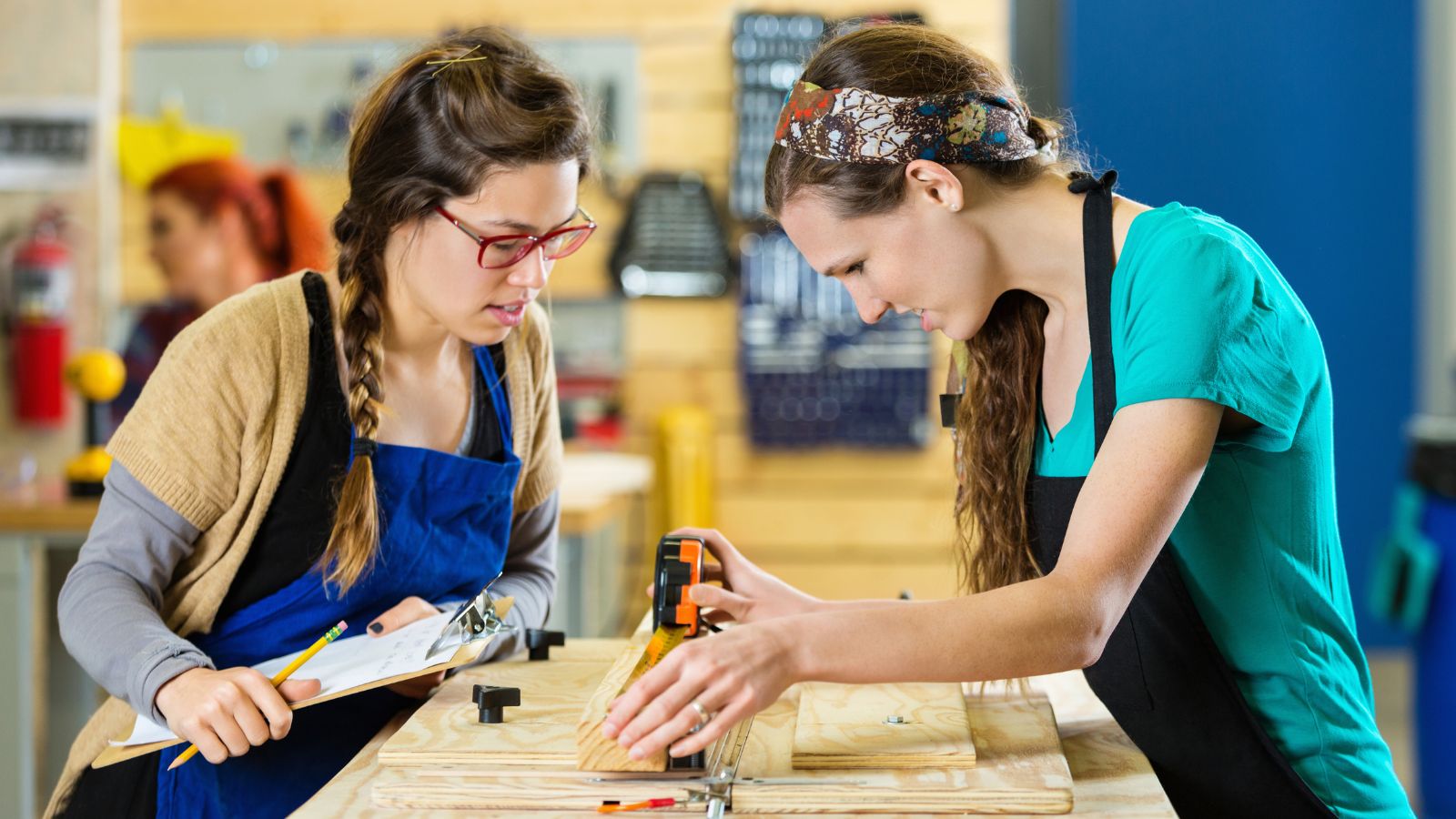
Machining is similar. You can learn to use tools like lathes or grinders in a local makerspace/fab lab, or with a friend you know who has a garage with those kinds of machines.
Some other paths, like working as a home health aide for the elderly, require more formal training. But even there, you can ease into it by volunteering at a local retirement home and seeing if it's something you connect with.
What About Robots Taking Those Jobs Too?
At some point, robots might take over many physical jobs as well.
If that happens, hopefully we'll all be enjoying some version of universal basic income (UBI).
But realistically, there will likely be a gap between AI taking over digital work and robots taking over physical work. Robotics requires more complex, real-world interaction, and progress there tends to be slower.
That gap could last longer than people expect.
And during that time, people will still need jobs.
And What About Art?
Art adds an interesting angle to all of this.
As AI-generated content becomes more common, human-made art may become more valuable, not less. Music, dance, theater - these are deeply human forms of expression that people connect with on a different level.
For example, people will get tired of AI generated movies and will prefer seeing a play at a local theater instead.

So it might make sense to explore creative, hands-on outlets like learning an instrument or performing.
While this may not be the most profitable path in the short term (especially if you're considering a career change) it could become increasingly valuable over time.
Bottom Line
Whether the future of digital jobs turns out to be bleak or not, one thing is clear:
Having non-digital skills is valuable.
They can help you in your personal life, save you money, and potentially open up entirely new career paths if you ever need them.
So take a moment to think about it.
What's one physical skill you'd like to learn?
And then - just start.